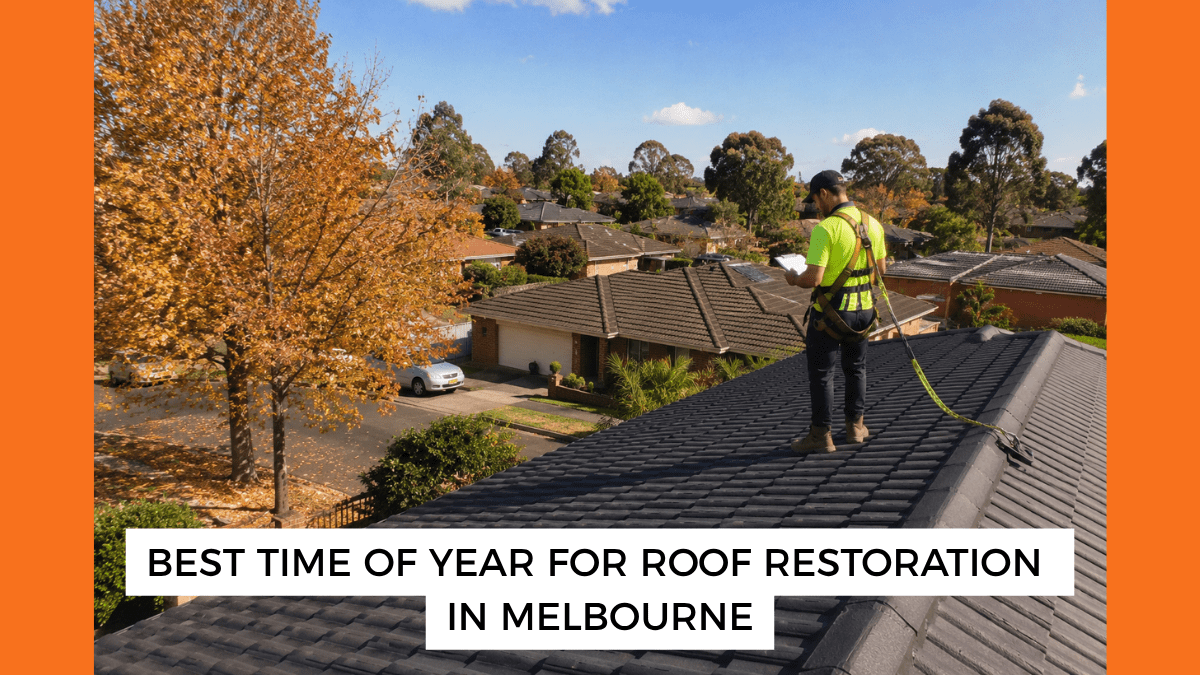
The Best Time of Year to Restore Your Roof in Melbourne
Melbourne’s climate gives you a narrow window each year when roof restoration conditions are genuinely ideal. Miss it, and your options are a rushed booking, a winter job that cures poorly, or another twelve months of wear on a roof that was already overdue. Knowing when to book makes all the difference.
Why Weather Conditions Matter for Roof Restoration
A roof restoration isn’t just a fresh coat of paint. It involves high-pressure cleaning, repairs to tiles and ridge capping, re-bedding and repointing, and multiple layers of primer and protective coating. Every one of those steps is affected by weather.
High-pressure cleaning needs adequate drying time before any coating work begins. If the surface is still damp when primer goes down, adhesion fails. Coatings need consistent temperatures to cure properly – too cold and they stay tacky; too hot, and they blister or dry unevenly. The roof restoration process involves more steps than most homeowners expect, and weather affects every one of them.
None of this is controllable in the wrong season. Choosing the right time of year is the simplest way to protect your investment before work even starts.
Melbourne's Best and Worst Months for Roof Restoration
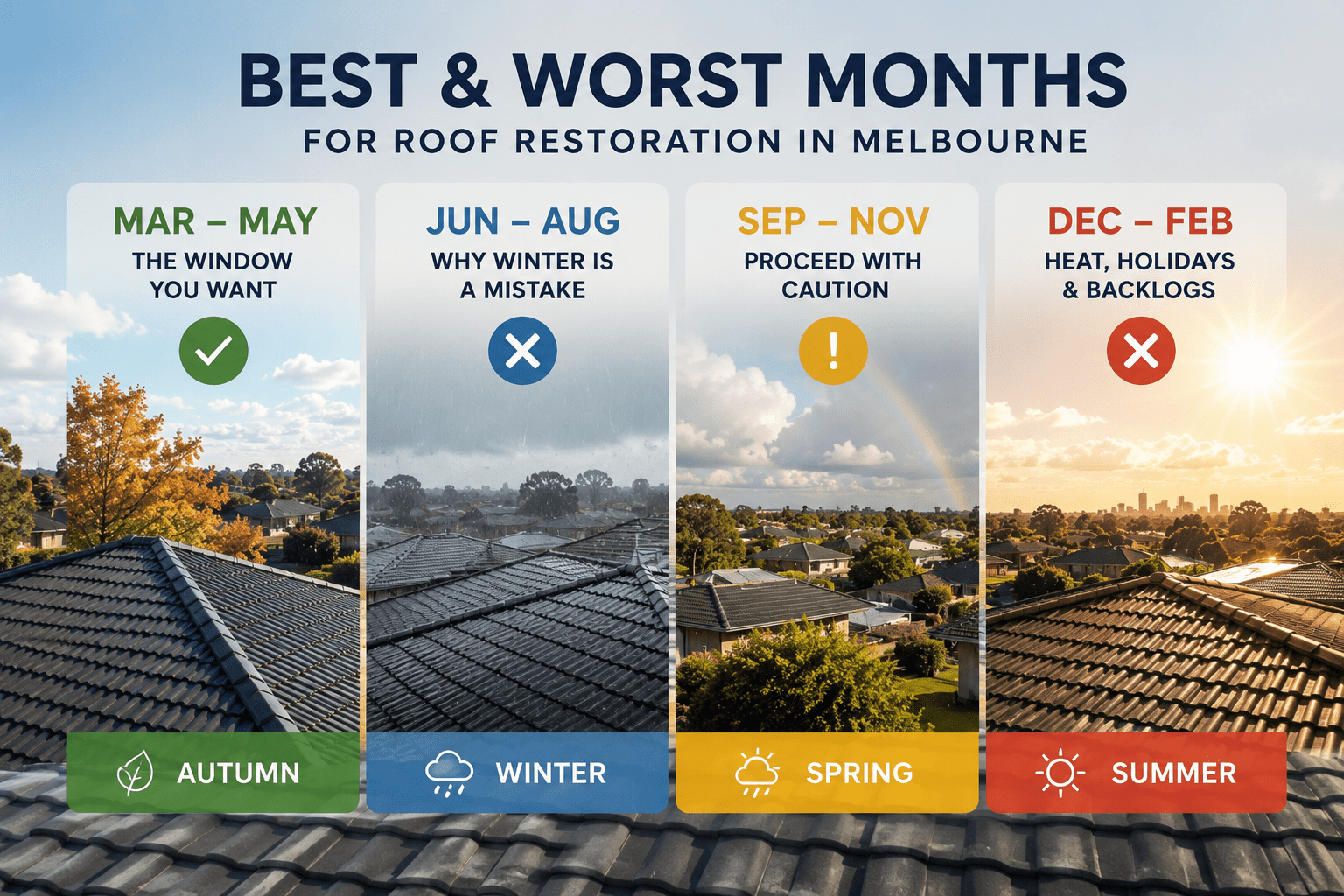
March to May: The Window You Want
Autumn is the sweet spot for roof restoration in Melbourne. Temperatures are mild, humidity drops from the summer peak, and March and April are statistically Melbourne’s driest months of the year, meaning dry spells long enough for a full job to be completed without interruption. Surfaces dry properly after cleaning, coatings cure as intended, and contractors can work consistently across multiple days.
For tile roof restoration specifically, this is the window to aim for. The surface conditions in autumn give coatings the best possible chance of bonding and lasting as expected.
June to August: Why Winter Is a Mistake
Winter is when homeowners most often regret delaying. Rain is frequent; cold temperatures slow coating cure times, and damp surfaces prevent primers from bonding properly. A job that starts in June faces constant weather interruptions and the real risk of coatings that never fully cure.
There’s also a common misconception that winter is a good time because contractors are less busy. Some are, but the better operators stay busy year-round, and those with gaps in winter often have gaps for a reason. Winter bookings carry genuine quality risk — the conditions that make restoration last aren’t available.
September to November: Proceed With Caution
Spring is workable but unpredictable. Melbourne’s notorious four-seasons-in-one-day weather makes scheduling unreliable, and unexpected rain can interrupt a job mid-coating. It’s a reasonable fallback if you’ve missed the autumn window, but book early – spring is when homeowners who delayed through winter start calling all at once.
December to February: Heat, Holidays, and Backlogs
Extreme heat affects how coatings adhere and cure on certain roof types, and it bakes existing moss and lichen onto the surface, making high-pressure cleaning more labour-intensive. Add the holiday period and stretched contractor schedules across Melbourne’s western suburbs and outer ring, and this becomes the worst time to try booking quality work at short notice.

How Far Ahead Should You Book a Roof Restoration?

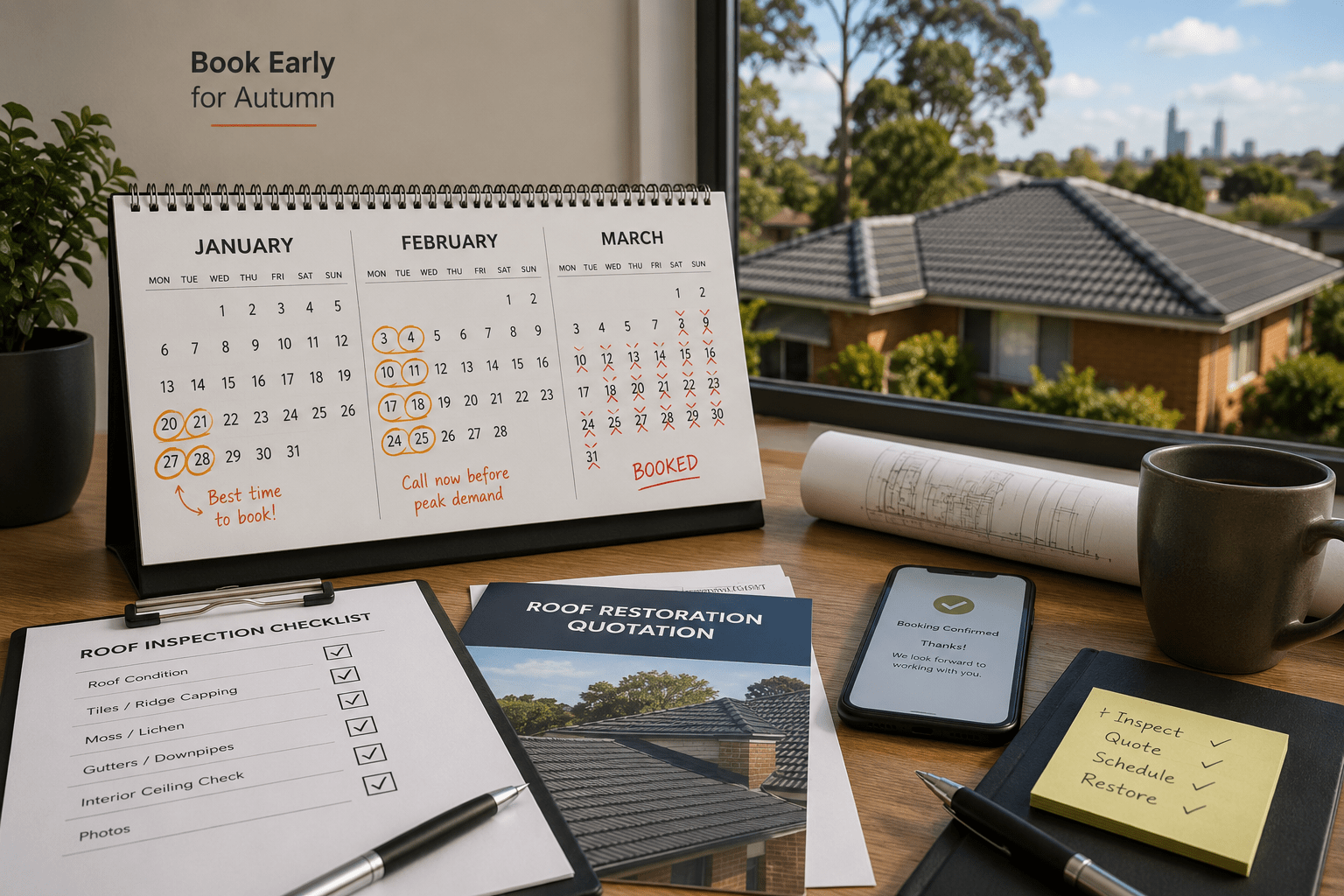
Reputable roofing contractors fill their autumn schedules well in advance. By the time March arrives, many are already booked out for the best weeks. The practical window to call is late summer, January or February, before peak demand hits.
This applies to the full process: inspection, quote, scheduling, and the job itself. Roof restoration isn’t a same-week service, rushing into the wrong season to save a few weeks of waiting rarely pays off.
Not Sure If Your Roof Actually Needs Restoration Yet?
A few things worth checking from the ground before you call anyone. Moss or lichen on the surface, fading or chalking coating, cracked or slipped tiles, and water stains on interior ceilings are all signs that restoration is likely overdue. Deteriorating ridge caps, where the mortar has cracked or the roof repointing has failed, are another easy-to-miss indicator until the problem becomes significant.
If you’re seeing one or more of these, it’s worth getting a roof inspection booked before the autumn window closes. Our guide to the warning signs your roof needs restoration covers each one in detail, including what causes it and what the fix typically involves.
Ready to Book Before the Rush?
The best time to restore your roof in Melbourne is before you urgently need to. Autumn gives you the ideal weather conditions, the best contractor availability, and the confidence that the job will be done properly.
Get in touch to book a roof restoration before the autumn window fills up.