


If you’ve ever searched for how often to clean gutters, you’ve probably seen the same answer everywhere: twice a year. That’s a reasonable starting point, but it doesn’t tell you much about your property. In Melbourne, the details matter more than most people realise.
Melbourne’s deciduous street trees, native eucalypts, seasonal storms, and varied roof designs all shift the real answer. Here’s how to work out the right gutter cleaning schedule for your property.
Melbourne's Two Key Gutter Cleaning Windows
Most Melbourne homes benefit from cleaning gutters at two specific points in the year, each tied to a seasonal event that causes the most gutter problems.
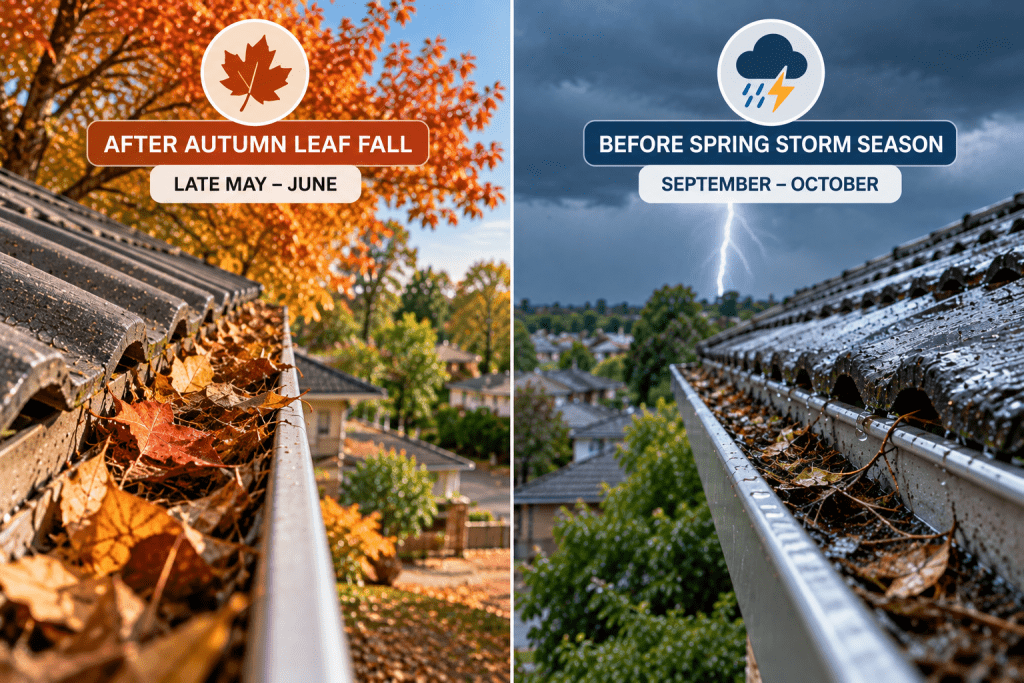
After Autumn Leaf Fall (Late May – June)
Melbourne’s inner and middle suburbs are lined with mature deciduous trees: elms, planes, oaks, and liquidambars. These shed heavily through April and May, and by late May most of that leaf matter has ended up exactly where you’d expect: in your gutters.
The mistake many homeowners make is waiting until winter to deal with it. By then, early winter rain has already compacted wet leaves into dense blockages, and water backs up behind the debris instead of draining.
Overflow damage can start with a single heavy downpour. Cleaning in late May or June, once the bulk of the leaf drop is done but before the winter wet sets in, is the best window.
Before Spring Storm Season (September – October)
Melbourne’s storm season typically peaks between October and December, when the Bureau of Meteorology records the highest frequency of severe thunderstorms across the greater Melbourne area. That means September or early October is your second critical cleaning window.
Over winter, smaller debris accumulates. Twigs, dirt, moss, and leaf fragments carried by wind. By spring, it’s often enough to slow drainage significantly. A professional gutter cleaning before storm season means your gutters are working at full capacity when they’re needed most.
How Tree Proximity Changes the Equation
The twice-a-year baseline assumes a typical suburban block without heavy tree cover. If your property has large trees nearby, you’ll likely need three or four cleans a year.
Different trees create different problems at different times:
- Eucalypts shed bark strips, leaves, and small branches year-round. There’s no single “drop season”, the debris is constant.
- Deciduous trees dump leaves in a four-to-six-week autumn window, but flowers and seed pods add material in spring and summer.
- Paperbarks, bottlebrush, and other natives drop fine, fibrous material that mats together when wet and blocks downpipe entries fast.
A practical rule of thumb: if you can see tree branches extending over your roofline, twice a year probably isn’t enough. Properties with no overhanging canopy may only need one thorough clean annually, though it’s still worth checking after major storms.
Flat Roofs vs. Pitched Roofs: Why Drainage Design Matters
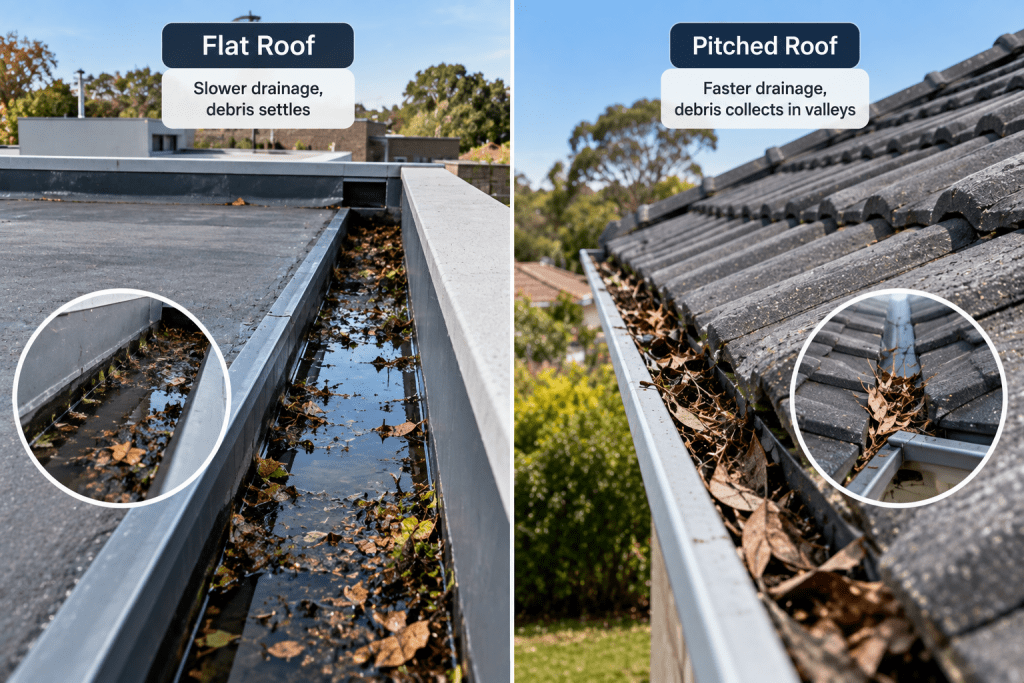
Flat Roofs
Your roof profile affects how quickly gutters reach a problem state. Flat and low-pitch roofs drain more slowly and rely heavily on box gutters and internal drainage channels – common on Melbourne extensions, garages, and older commercial-style builds.
Because water moves slowly across a flat surface, debris settles rather than washing toward outlets, and box gutters can hold standing water that accelerates corrosion and blockages.
Pitched Roofs
Pitched roofs shed water and debris more efficiently, but complex rooflines with multiple valleys concentrate debris at junction points. Valley gutters on tiled roofs are some of the most common spots for hidden blockages. If your roof has valleys or box gutters, factor in at least one extra check per year, even if the rest of your gutter run looks clear.
If you’re unsure how your roof handles drainage, a roof inspection can identify the areas most prone to buildup.
How to Tell If Your Property Needs More Frequent Cleaning
You don’t need to climb a ladder to spot the warning signs. All of these are visible from the ground:
- Water spilling over gutter edges during moderate rain: If it’s not a downpour and your gutters are overflowing, they’re blocked.
- Plants growing in the gutter line: Soil builds up in neglected gutters faster than you’d expect. Visible seedlings mean debris has been sitting for months.
- Staining or dark streaks on fascia boards: This indicates water is regularly sitting behind the gutter rather than draining through it.
- Birds or pests nesting in the gutter: Accumulated debris makes attractive nesting material, and nests block flow further.
- Sagging gutter sections: Wet, compacted debris is heavy. If a gutter section is pulling away from the fascia, weight from buildup is the most common cause.
If any of these apply, your current cleaning schedule isn’t frequent enough.
What Happens When Gutters Go Too Long Between Cleans
The consequences aren’t always gradual. In Melbourne’s climate, damage can develop quickly.

Water Ingress Into Your Roof Structure
Water backing up behind blocked gutters can reach fascia boards, eaves, and the roof cavity during a single heavy storm. Once moisture reaches timber framing, rot follows, and it’s often not visible from outside until the damage is advanced.
Foundation and Subfloor Damage
Overflowing gutters pool water against external walls instead of directing it away from the building. Over time, this saturates soil around footings and can cause rising damp or subfloor moisture issues.
Rust and Corrosion
Wet debris sitting against metal gutter surfaces for months accelerates corrosion. What starts as surface rust can become perforation — at that point you’re looking at gutter replacement rather than a simple gutter cleaning
Mosquito Breeding
Standing water in blocked gutters is an ideal mosquito breeding environment. Melbourne councils actively monitor for mosquito-borne disease risk during warmer months, and neglected gutters are a common contributor.
Insurance Complications
This is the one most homeowners don’t think about. Some home insurance policies exclude or limit cover for water damage caused by poorly maintained gutters. If an insurer determines the damage resulted from lack of upkeep, a claim may be reduced or denied.
When to Book a Professional Gutter Clean
Melbourne’s storm season doesn’t wait, and catching up before the first major downpour is always better than dealing with the damage after.
For properties with heavy tree cover or complex rooflines, booking a recurring schedule three or four times a year, takes the guesswork out of it.
If you want to reduce cleaning frequency over the long term, Leaf Guard system is worth considering. They won’t eliminate maintenance entirely, but they can extend the interval between professional cleans significantly.
Roof Plumber Melbourne services all Melbourne suburbs. Get in touch to book a gutter clean or ask about a maintenance schedule that suits your property.