

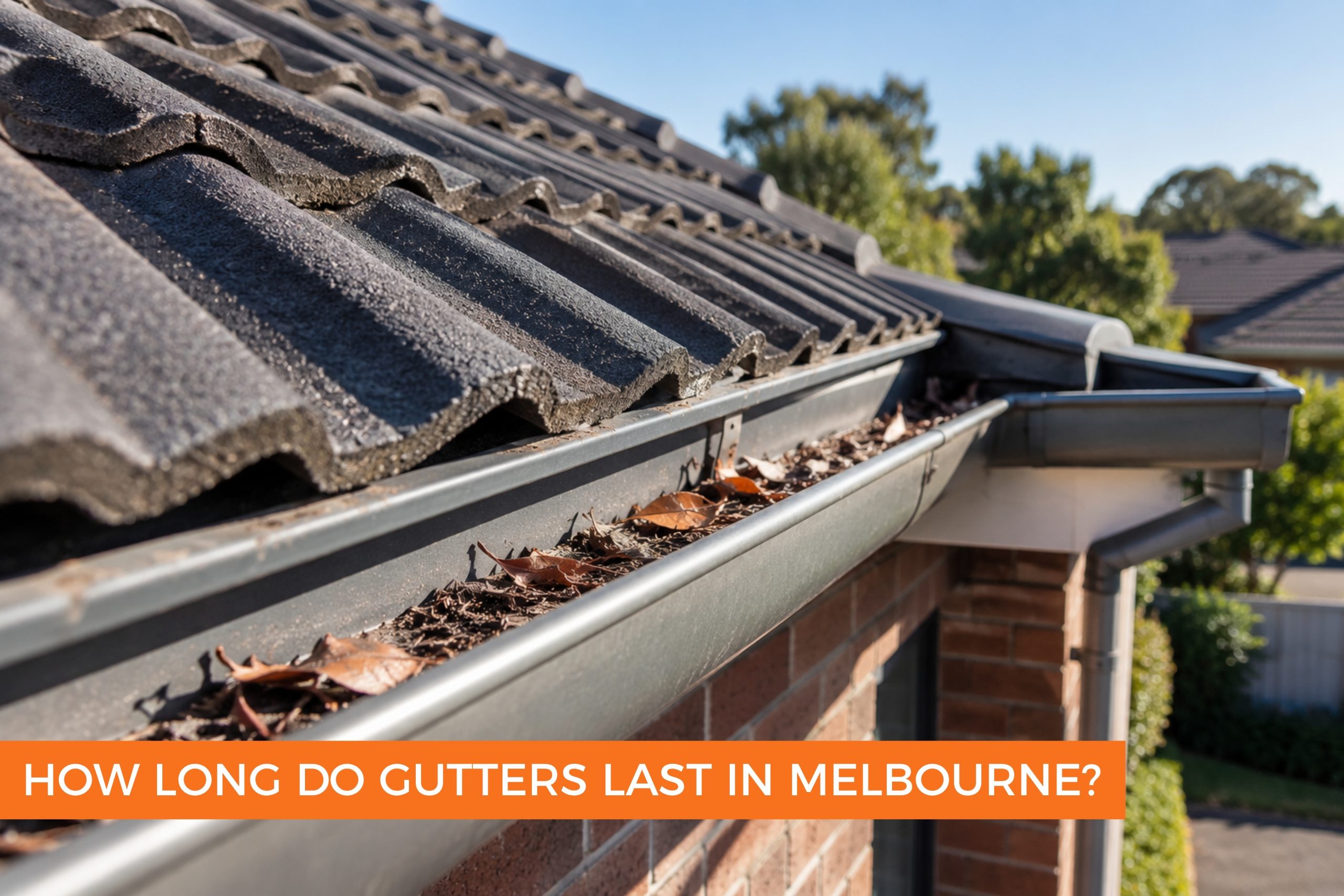
How Long Do Gutters Last in Melbourne?
There’s a tidy rule going around that says replace your gutters every 20 years and be done with it. It’s a comforting number and not much use to you, because the real answer depends on what your gutters are made of, how old they are, how much damage they’ve copped, and how well they’ve been looked after.
This guide gives you the honest version, so you know where your own gutters stand before anyone gives you a quote.
The Honest Answer Depends on What They're Made Of
Material sets the baseline. Everything else either shortens that number or helps you reach it.
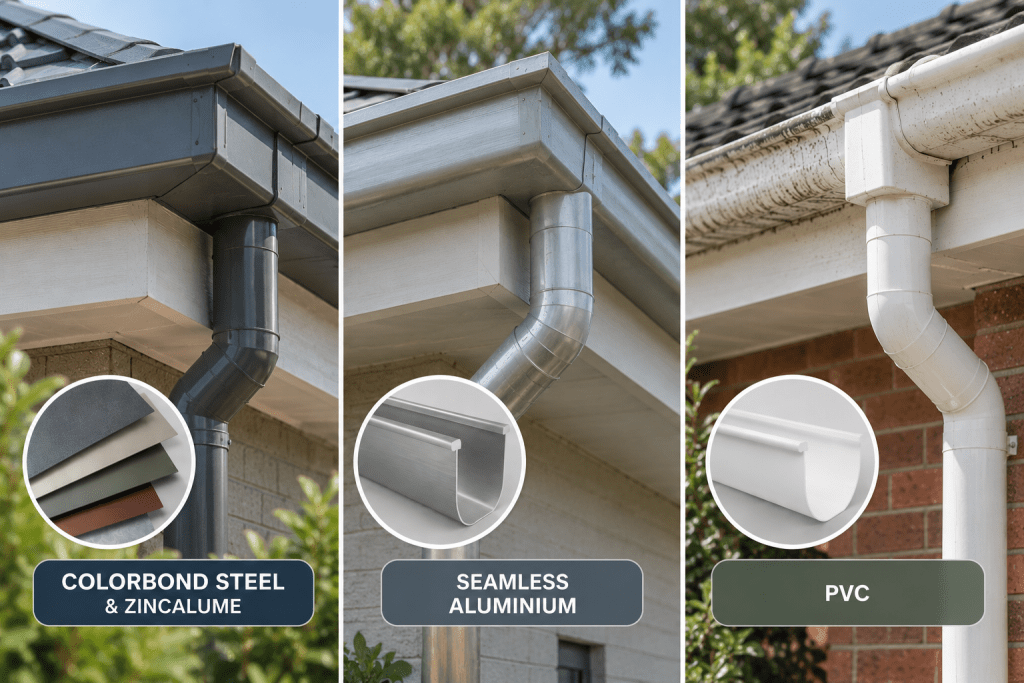
Colorbond Steel and Zincalume
Colorbond steel is the workhorse of Australian guttering. In most Melbourne suburbs a well-installed system runs 20 to 30 years, with surface rust usually appearing around the 15-to-20-year mark as the first sign of ageing.
Zincalume, the unpainted alloy-coated steel, sits in a slightly shorter bracket and tends to show wear a little sooner without the paint layer protecting it. Both are solid choices for homes away from the coast.
Seamless Aluminium
Aluminium resists rust naturally and typically lasts 25 to 30 years, holding its finish well over that time. The trade-off is softness, because it dents more easily than steel, and that matters in a city that regularly cops summer hail and the odd stray ladder.
If your property is reasonably sheltered from hail and you want a low-corrosion option, it’s a sound choice worth putting on the shortlist.
PVC
PVC is the cheapest option at purchase, and that low upfront price is the whole of its appeal. Under the sustained UV that Melbourne summers deliver, it grows brittle and loses its flex, which is exactly what a gutter needs to handle the heat expansion and contraction of a hot day.
The joints and brackets tend to fail first, and once a section cracks there’s no repairing it, only replacing it. Add in how easily hail splits ageing plastic, and for a permanent roofline here it works out to be a false economy.
Why Melbourne Shortens Every One of These Numbers
Those figures are the ceiling, not the guarantee. Intense summer UV degrades finishes and seals faster than people expect, sudden downpours test every joint at once, and hail dents metal and plastic alike. Within a few kilometres of the bay, salt in the air speeds up corrosion. Installation quality is the other lever, because poor pitch, loose brackets or gaps at the joins let water pool and deterioration start early.
| Material | Typical Melbourne lifespan | What usually kills it first |
|---|---|---|
| Colorbond steel | 20-30 years | Rust, from around 15-20 years |
| Zincalume | 15-25 years | Corrosion at joins and cut edges |
| Seamless aluminium | 25-30 years | Hail dents, impact damage |
| PVC | Well under the metals | UV brittleness, cracked joints |
(Coastal and bay-side homes should read toward the lower end of each range.)
Repair or Replace: How to Tell Which One You Need
Most homeowners land here with a symptom, not a verdict: a rust streak down the fascia, an overflow in the last storm, a section that’s sagging. The useful question is whether it’s a patch or a project, and the extent of the problem is what separates the two.
When a Repair Is Enough
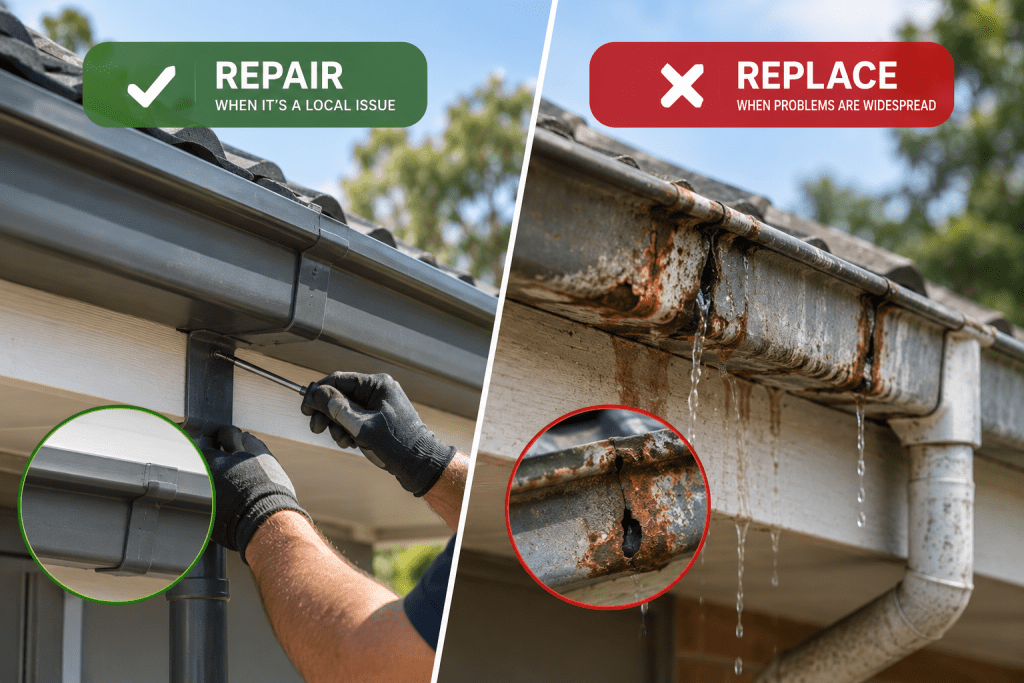
If the trouble is contained, a repair is the sensible call: a single isolated rust spot, one failed joint or leaking corner, a loose bracket that’s let a section drop, or storm damage limited to one short run. The rest of the system still has life in it, so there’s no reason to spend on a full replacement to fix a localised fault, and any honest roof plumber will tell you the same thing.
When You're Past Repair
Replacement becomes the honest call when the problems are no longer isolated:
- A sagging profile where the gutter has pulled away from the fascia or lost its fall.
- Widespread rust rather than a single spot, especially where it’s perforated through or bleeding onto the fascia.
- Leaks at several points, or joints that keep failing after being resealed.
- Overflow during rain even when the gutters are clean, which points to the gutter itself failing rather than a blockage.
When two or more show up together, patching turns into whack-a-mole. At that point a full gutter replacement costs less over time than the running total of repairs on a system that’s structurally tired. For storm damage, photograph everything before anyone touches it and lodge it with your insurer promptly, since these claims get scrutinised closely and a clear record of the damage makes all the difference.
The Same Rust Spot Means Different Things at Year Six and Year Twenty
This is the part the “replace every 20 years” rule can’t account for. A rust spot on a six-year-old Colorbond gutter is almost always a repair; the system has the best part of two decades left.
The identical spot on a twenty-year-old gutter is often the first sign the whole run is finishing, and patching it just delays a replacement you’ll be making within a year or two anyway.
As a rough guide: under ten years with a localised fault, repair it; ten to fifteen, get a proper inspection because it could go either way; past fifteen with multiple problems, put the money toward replacement. It’s the same symptom leading to a different decision, and the deciding factor is simply the number of years already on the clock.
Repair Cycles vs One Replacement Over Ten Years
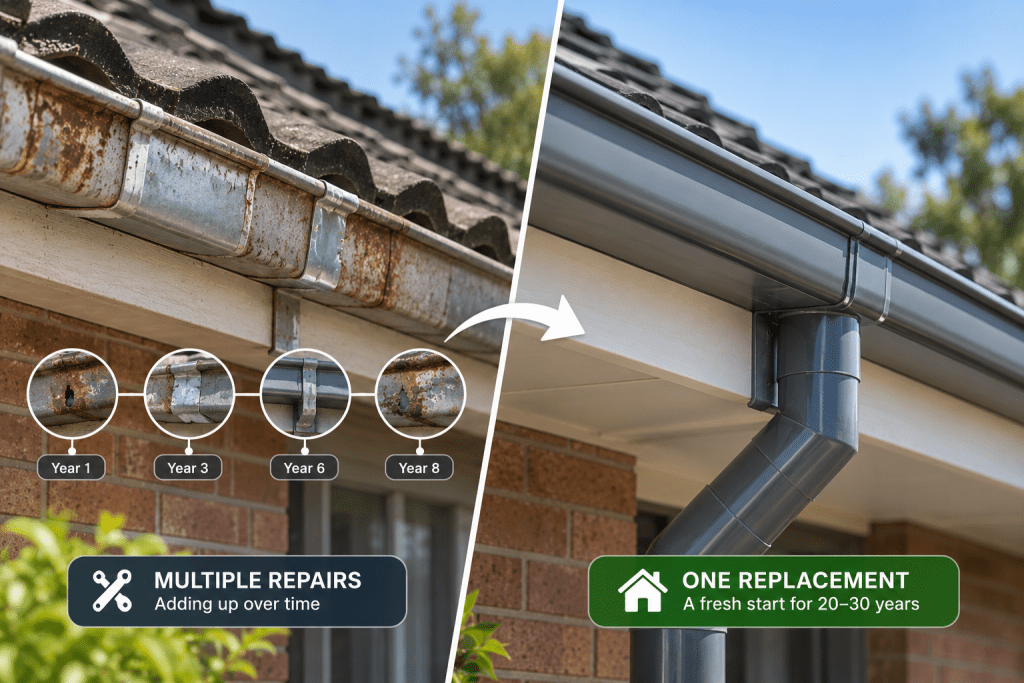
Think across a decade rather than a single invoice. On a young, sound system the occasional repair is genuinely cheaper. On an ageing one, repairs arrive in a steady procession, and at some point their sum quietly overtakes what a single replacement would have cost, leaving you with old gutters instead of new ones.
A replacement in a metal system resets the clock for another two to three decades and lets you fix the underlying issues at the same time, undersized downpipes or poor fall, so the new system actually copes with Melbourne’s rain.
If your roof itself is also showing its age, it’s often the moment to weigh up the bigger roofing decision at the same time, since doing both together saves paying twice for access and labour.
Maintenance Is the Lever You Actually Control
Material and age are fixed once your gutters are up. Maintenance is the one variable in your hands, and it’s the difference between reaching the top of a range and falling short. Debris traps moisture against the metal, and that’s what starts corrosion early.
Two cleans a year does it for most Melbourne homes: once in late autumn after the leaf fall, once in late spring before storm season. Keeping your gutters cleared also protects the flow capacity you paid for.
Working Out Where Your Gutters Stand
Put the four factors together, material, age, extent of damage and maintenance history, and you’ll have your answer before anyone climbs a ladder. If the picture is clearly young, sound and localised, book a repair with confidence.
If it’s aged, widespread, or you can’t tell, that’s the moment for a professional set of eyes. The licensed roof plumbers at Roof Plumbers Melbourne will inspect the system, show you what they find, and give you an honest read either way.
Get in touch for a free quote and you’ll know exactly where you stand.