


What to Expect During a Roof Replacement in Melbourne
If you’ve been told your roof needs replacing, the first question is usually the most practical: how long does a roof replacement take, and what will it actually be like to live through?
For most homeowners, the idea of a major roofing project feels uncertain and disruptive. That’s a fair concern, but the roof replacement process is more predictable than most people think. This guide covers the roof replacement Melbourne homeowners can expect: timeline, daily process, disruption, and what to check once the job is done.
How Long Does a Roof Replacement Take?
Typical timeline for a standard Melbourne home
For a straightforward roof replacement on a single-storey Melbourne home, most jobs take between three and five working days. That covers removing the old roof, inspecting the structure, installing new materials, fitting flashings and cappings, and cleaning up.
A standard three-bedroom home with a simple roofline and no structural surprises will sit at the shorter end. Larger homes, steeper pitches, or roofs with multiple hip lines and valleys take longer.
What can make the job take longer
Several factors can push the roof replacement timeline beyond five days:
- Roof size and pitch: More surface area means more tear-off, more material handling, and more installation time. Steeper pitches also slow the crew due to harness and safety requirements.
- Hidden structural damage: Once the old roof is removed, the crew inspects battens, sarking, and structural timber. If rot, termite damage, or water damage is found, repairs are needed before the new roof goes on. This can add a day or two.
- Material type: A Colorbond roof replacement is generally faster than concrete or terracotta tile, because metal sheeting covers more area per panel. Tile roofs require individual placement and may need wet fixing or additional structural support.
- Weather: Melbourne’s weather is unpredictable. Rain, high winds, or extreme heat can all pause work for safety and quality reasons.
What Happens On Site Each Day
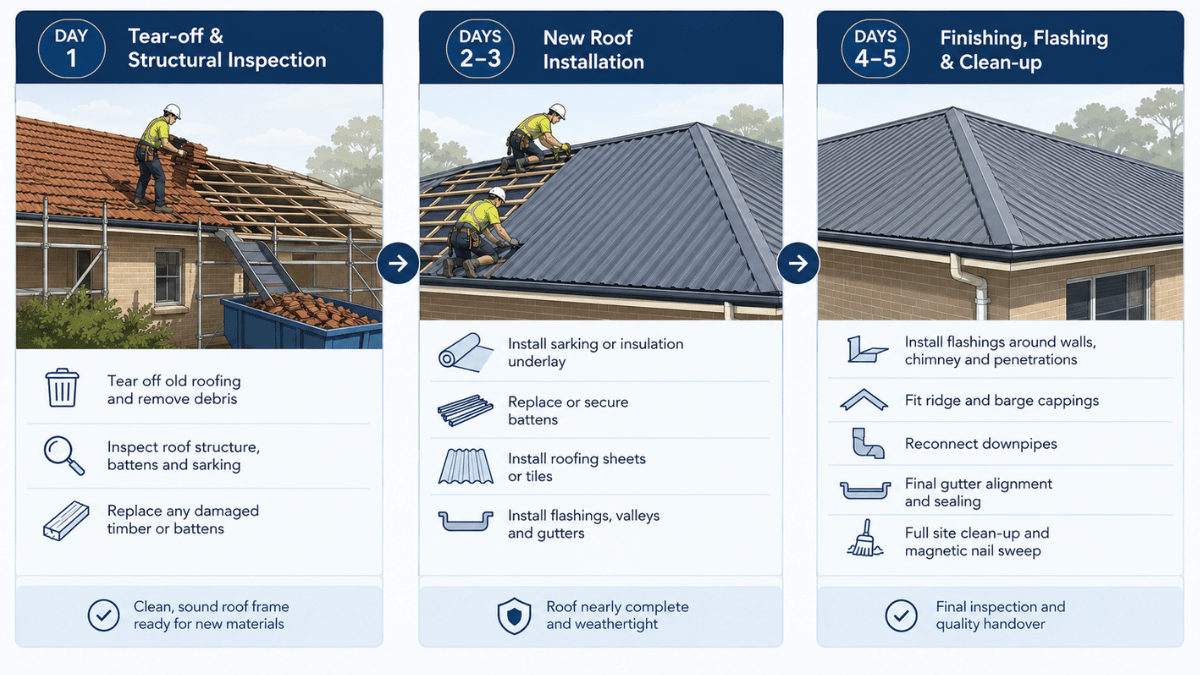
Day 1: Tear-off and structural inspection
The crew arrives early and begins the roof tear-off. Old roofing material, whether tile, metal, or cement sheeting, is stripped back to expose the frame. Debris is lowered into a skip bin or loaded directly onto a truck.
Once the old roof is off, the structure is inspected. Battens are checked for rot or sagging, and sarking (the underlay membrane) is assessed. Any timber or batten replacements happen during this stage.
In older Melbourne homes, particularly those with concrete or terracotta tile roofs common in the eastern and south-eastern suburbs, this stage sometimes uncovers moisture damage that wasn’t visible from street level. By the end of day one, the roof frame should be clean, sound, and ready for new materials.
Days 2 to 3: New roof installation
This is the main build phase. New sarking or insulation underlay is rolled out, battens are replaced or secured, and new roofing sheets or tiles are installed section by section.
For Colorbond or metal roofing, the crew works across the roof in rows, fastening sheets and fitting ridge cappings as they go. For tile roofs, bedding and pointing follows tile placement. Guttering, valley irons, and box gutters are also installed or reconnected during this phase.
Days 4 to 5: Flashing, finishing, and clean-up
The final stage covers the detail work that makes a roof watertight and compliant:
- Flashings fitted around walls, chimneys, vents, and other penetrations
- Ridge and barge cappings aligned and sealed
- Downpipes reconnected
- Final gutter alignment and sealing
- Full site clean-up, including a magnetic nail sweep of the yard and driveway
Your roof plumber should walk you through the completed work before the crew packs up.
Noise and Disruption: What to Expect
When it's loudest
Noise during roof replacement is significant, and day one is the peak. The tear-off phase involves constant scraping, hammering, and debris hitting the skip bin.
Days two and three are still noisy, particularly when nail guns are in use, but the sound is more consistent and less jarring than tear-off. By the final days, noise drops noticeably as the crew shifts to flashing, sealing, and detail work.
Do you need to leave the house?
No. Most homeowners stay home during a roof replacement. All work happens on the exterior, and the interior of your home stays protected throughout.
That said, if you work from home, plan to be out or in a quiet room on day one. If you have young children or you’re sensitive to sustained loud noise, the first two days are more comfortable spent elsewhere. It is not a requirement, but it helps.
Driveway, yard, and pets
There are a few practical things worth preparing for before work starts:
- Driveway: The crew needs space for a skip bin, materials, and vehicles. Move your car to the street the night before so you’re not blocked in.
- Yard and outdoor furniture: Move anything fragile or valuable away from the house perimeter. Debris can fall during tear-off, and the crew needs clear access around the roofline.
- Pets: Dogs and cats can become stressed by the noise and activity overhead. If your pet reacts badly to thunderstorms or fireworks, arrange for them to stay elsewhere on the loudest days.
Weather Delays: How They're Managed
Melbourne’s weather can shift quickly, and experienced roof plumbers plan around it. If rain is forecast, the crew may delay the start or pause mid-job to protect the exposed structure with temporary waterproof membranes and tarps.
No reputable roof plumber will leave your home exposed overnight without protection. If a delay occurs, your contractor should communicate the revised timeline and keep you updated daily.
Light rain or overcast conditions usually don’t stop work. Heavy rain, strong winds, or hail will. In changeable Melbourne weather, expect that conditions could add a day or two to the schedule.
What to Check Before the Crew Leaves
Walk-around inspection checklist
Before signing off on the job, walk the property with your roof plumber. Use this as your roof replacement completion checklist:
- All old materials removed and site cleaned
- No loose nails, debris, or offcuts in the yard, gutters, or driveway
- Flashings fitted neatly around walls, vents, and penetrations
- Gutters and downpipes reconnected and flowing correctly
- Ridge and barge cappings aligned and sealed
- No visible gaps, lifted sheets, or unfinished sections
If anything looks incomplete, raise it on the spot. It is far easier to resolve while the crew is still on site.
Warranty documents to request
Before the job is considered complete, make sure you receive the following:
- Workmanship warranty from the roofing company, covering installation quality and labour. Ask what is included, for how long, and how to lodge a claim if needed.
- Manufacturer’s product warranty for the roofing material. For Colorbond steel, BlueScope offers material warranties covering corrosion and paint performance, with warranty periods that vary depending on your roof’s location, pitch, and product type. Ask your roof plumber to confirm the applicable warranty for your property.
- Plumbing compliance certificate, confirming the work meets Victorian plumbing regulations. Your roof plumber is required to provide this on completion.
If you’d like an independent assessment before signing off, our roof inspection and reports service covers post-installation checks. Keep all warranty documents with your building records. If you sell the property in future, these add value and prove the work was completed to standard.
Ready to Replace Your Roof?
Knowing what to expect makes it easier to commit. Roof Plumbers Melbourne has over 20-year workmanship warranty and a licensed team available 24/7. Learn more about our roof replacement services, or call 1300 692 392 for a free quote.